
#Trade with Cuba collapses as Trump escalates pressure on Communist Party leadership.

Whether it’s the United States trade embargo to counter Fidel Castro’s 1959 revolution, or the widespread starvation of the “special period” that followed the breakup of its Cold War patron, the Soviet Union, both U.S. hostilities and calamities of its own making have proven no match for the country’s leadership.

But perhaps none of those crises pose as grave a threat as the one triggered by an all-but-declared naval siege by the Trump administration as it seeks to force regime change in the wake of its successful ousting of Cuba’s longtime ally Venezuelan President Nicolas Maduro.

Even as he fights a war with Iran, U.S. President Donald Trump this week said he believes he’ll have “the honor of taking Cuba” soon. While it wasn’t clear exactly what he meant, the U.S. is looking for President Miguel Diaz-Canel to leave power as part of ongoing talks with Havana that could avert some kind of U.S. military intervention.

Without declaring a formal blockade, Trump and his administration have already crippled trade with the island.

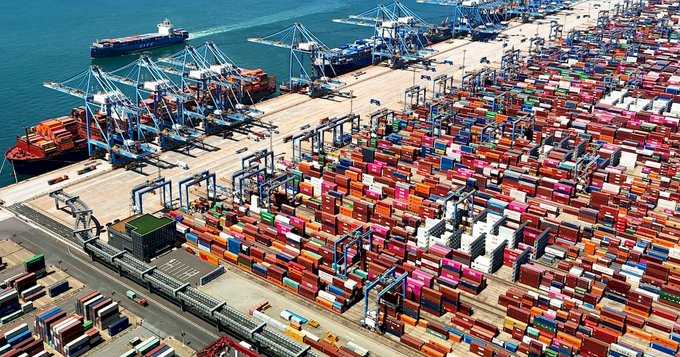
In March, supplies of oil, food and other goods to the island collapsed, with no foreign-originating tankers arriving to Cuba, according to shipping data analyzed by Windward, a maritime intelligence firm. The volume of port calls, which includes tankers moving from one Cuban port to another, averaged around 50 per month in 2025 but fell to just 11 in March - all of them arriving from domestic ports. It was the lowest since 2017. Moreover, little relief is in sight: with no tankers and only three container ships -- originating in China, India and the Netherlands -- listing Cuba as their intended harbor. On Thursday, The Associated Press reported that two vessels, one of them sanctioned by the U.S., could arrive in the coming days carrying Russian fuel.

The stranglehold is disrupting the lives of Cuba’s 11 million residents, who are enduring massive blackouts and a breakdown in medical care due to a lack of fuel to power ambulances and hospital generators. The country, one of the most heavily reliant in the world on oil to generate electricity, produces barely 40% of the oil needed to cover its energy needs.

Ian Ralby, head of I.R. Consilium, a U.S.-based consultancy focused on maritime security, said the United States’ aggressiveness will not endear Trump to Cubans long eager for change.

“Every Cuban resident is suffering the acute inaccessibility to fuel and all the knock-on consequences in terms of access to food, hospitals and free movement,” he said.

The sudden halt in trade has taken place without the White House reapplying restrictions on exports to Cuba that were last loosened during the Biden administration. Indeed, shipments of U.S.-produced poultry, pork and other foodstuffs to Cuba -- which account for the vast majority of U.S. exports to the country -- last year soared to $490 million, the most since 2009. Non-agricultural exports and humanitarian donations, much of it to Cuba’s emerging private sector, more than doubled.

But emboldened by the U.S. capture of Maduro, Trump has gradually escalated his rhetoric on Cuba, first suggesting he would pursue “a friendly takeover” of the country and more recently telling conservative allies from Latin America that he would “take care” of Cuba once the war with Iran winds down.

While neither he nor the administration has articulated what exactly the pledge means, the continued presence in the Caribbean of U.S. warships used in the strike against Maduro has led companies and countries that do business with Cuba to self-police.

“Nobody wants to be on the radar of Trump’s Truth Social account,” said John Kavulich, president of the New York-based U.S.-Cuba Trade and Economic Council.

In the run-up to the U.S. military’s ousting of Maduro during a nighttime raid on Jan. 3, Trump declared that the U.S. would block all Venezuelan oil shipments to Cuba and even seized a few tankers to enforce what it called a “quarantine,” borrowing a term used by President John F. Kennedy during the 1962 Cuban missile crisis. Later in the month, Trump signed an executive order threatening tariffs on any country that supplies oil to Cuba. The warning alarmed officials in Mexico, who have long opposed U.S. policy toward Cuba and where state-run oil company Pemex emerged as a valuable lifeline last year as Venezuelan oil exports declined.

Cuba has upped its rhetoric against what it calls a “fuel blockade” by the U.S. But the Trump administration has disputed that characterization, no doubt aware that according to international law any naval operation seen as punishing civilians is considered an illegal act of aggression outside wartime.

“Cuba is a free, independent and sovereign state -- nobody dictates what we do,” Diaz-Canel said in a social media post in January. “Cuba does not attack; we are the victims of U.S. attacks for 66 years and we will prepare ourselves to defend the homeland with our last drop of blood.”

Amid mounting criticism that U.S. actions are starving Cuba, Secretary of State Marco Rubio has started to walk back some of the administration’s threats. In January, the State Department sent $3 million in food kits, water purification tablets and other humanitarian assistance items to the island. Then last month, the White House said it would allow U.S. companies to send fuel -- including Venezuelan oil -- to private businesses in Cuba.

The goal, said Rubio, is to encourage the development of the nation’s small private sector.

“The reason why those industries have not flourished in Cuba is because the regime has not allowed them to flourish,” Rubio said when announcing the private sales.

But it’s unclear if any companies have started fuel shipments and critics say the strategy is unrealistic as most Cuban companies lack capital and the Cuban government has a monopoly on gasoline distribution.

John Felder, owner of Premier Automotive Export, a Maryland-based business that has been selling electric cars and scooters to Cuba since 2012, said most Cubans, even in their current anguish, are fearful of what lies ahead.

“U.S. policies have created the most resilient people in the world and yet all they want to do is buy things in Miami like you and me,” said Felder, who just returned from a four-day business trip to Havana and says he’s never seen conditions worse. “They want change but they don’t want to be controlled by the United States.”

Joshua Goodman, The Associated Press


View 246 times

Conflict around Iran to push back global trade system — official

The conflict in the Middle East will push back for years the evolved international trade and economic relations system, aide to the Russian President and chairman of the Marine Board Nikolay Patrushev said in an interview with Kommersant newspaper.

"To all appearances, the recent conflict [around Iran] will drive back the established system of international trade and economic relations for years," Patrushev noted.

"The Strait of Hormuz was a connecting link for international logistical chains that are mainly ruined now. It turns into the zone of standoff, dangerous for navigation," he added.


View 243 times

Greer says U.S. #trade talks with Canada lagging behind those with Mexico.

WASHINGTON — Trade talks with Canada ahead of the mandatory review of the continental trade pact are lagging behind those with Mexico, United States Trade Representative Jamieson Greer said on Wednesday.

Greer told Fox Business that talks are moving ahead with his Mexican counterparts as the Trump administration negotiates changes to the Canada-U.S.-Mexico Agreement on trade, better known as CUSMA.

“We’re having talks separately with Canada, but we’ve moved along with Mexico,” Greer said. “Canada is behind on this.”

Canada-U.S. Trade Minister Dominic LeBlanc met with Greer in Washington on March 6, days after the Trump administration announced it was officially beginning negotiations with Mexico.

Trade War coverage on BNNBloomberg.ca

The meeting was seen by some as a sign of a thaw in Canada-U.S. relations after U.S. President Donald Trump froze negotiations with Canada last year because he was angered by an Ontario-sponsored ad quoting former president Ronald Reagan criticizing tariffs.

But no announcement of formal negotiations with Canada has emerged from the Trump administration since that meeting took place.

LeBlanc’s spokesperson Gabriel Brunet said the government has “always said that there would be bilateral and trilateral discussions as part of the CUSMA review — and it’s not unusual for bilateral discussions between each party to move at a different pace.”

“Minister LeBlanc remains in contact with Ambassador Greer and looks forward to further engagement in the coming weeks,” Brunet said in an email.

CUSMA -- which was negotiated during the first Trump administration to replace the North American Free Trade Agreement -- has shielded Canada and Mexico from the worst impacts of Trump’s tariffs. His worldwide 10 per cent duty does not apply to goods that comply with the trade agreement.

Canada is still being slammed by Trump’s separate tariffs on industries like steel, aluminum, autos, lumber and cabinets.

The Trump administration last week launched investigations under Section 301 of the Trade Act of 1974 of a long list of countries, including Canada, citing forced labour in supply chains. It was seen as a move to reinstate Trump’s higher tariffs following a U.S Supreme Court ruling that reined in the president’s tariff powers.

Greer said he was meeting Mexico’s Economy Secretary Marcelo Ebrard later Wednesday for formal negotiations. He said they would discuss rules of origin requirements under the agreement.

“We just don’t want Mexico to become a hub for goods imported from Vietnam or China or somewhere else,” Greer said. “If we’re going have some kind of a deal, it has to be a deal for Mexico and the United States and the goods should be made up of content from Mexico and United States.”

Greer has complained that Canadians maintain barriers that make it difficult to hold bilateral trade talks, citing provincial bans on U.S. alcohol.

CUSMA is up for review this year but the future of the continental trade agreement has been left in doubt by Trump. He has called CUSMA irrelevant and has said it may have served its purpose.

Latest updates on international news here

Greer also has floated the idea of abandoning the trade pact in favour of two separate bilateral agreements with America’s closest neighbours.

The CUSMA review sets up a three-way choice for each country to make in July. They can renew the deal for another 16 years, withdraw from it or signal both non-renewal and non-withdrawal -- which would trigger an annual review that could keep negotiations going for up to a decade.

Ottawa and Mexico City have both said the priority is to maintain an agreement between all three countries.

LeBlanc led a large trade mission to Mexico last month and a Mexican trade delegation is set to travel to Canada in May

This report by The Canadian Press was first published March 18, 2026.

Kelly Geraldine Malone, The Canadian Press


View 243 times

Workers at a critical beef-processing plant owned by JBS JBS 1.39%increase; green up pointing triangle went on strike Monday, stifling production at a time when prices for the protein are at record highs.

The Greeley, Colo., plant is one of the largest of its type in the U.S. It can slaughter about 6,000 cattle a day, and accounts for roughly 5% of America’s beef-processing capacity.

The strike among unionized workers is the largest at a meat plant in decades. It also comes as meat companies are losing billions of dollars annually producing beef. The smallest cattle herd in 75 years has driven up the cost of purchasing cattle from ranchers, squeezing meatpackers’ profits.

JBS, whose headquarters is in Brazil, is the world’s largest meatpacker and the top beef processor in the U.S. by volume. Through the first nine months of 2025, JBS reported a $566 million operating loss in its North American beef business, compared with a $64 million loss the prior year.

The United Food and Commercial Workers International Union last year agreed to a new long-term labor contract covering about 26,000 workers across more than a dozen U.S. facilities.

The union local representing about 3,800 Greeley workers opted out of the national deal, saying that it didn’t account for the higher cost of living in Colorado.

JBS and the Greeley union local negotiated for months on a new labor contract, but weren’t able to reach an agreement.

The union said JBS has refused wage increases that keep pace with inflation. It wants the company to stop charging employees for certain protective equipment, such as gloves, that they wear to do their jobs.

“JBS is more interested in a labor dispute at the Greeley plant than resolving these issues,” said Kim Cordova, president of the United Food and Commercial Workers International Union local that represents Greeley workers.

JBS said its goal is to minimize impact on its customers and the broader marketplace. It also said any employees who don’t want to strike can come to work and be paid.

​“We do not believe a strike is in the best interest of our team members or their families,” a JBS spokeswoman said. “We stand by the offer we presented. It is strong, fair, and consistent with the historic national contract reached in 2025.”

The spokeswoman also said the union’s claim about personal-protective gear is inaccurate. She said that employees are only responsible for paying for equipment if it is lost or maliciously damaged.

JBS’s U.S.-listed shares were up more than 1% on Monday. Over the past month, shares are down about 4%.

JBS began canceling cattle shipments and halting slaughter at the plant last week in preparation for a potential work stoppage. The company is shifting cattle deliveries from feedlots where livestock are fattened to its other large processing facilities across the U.S., such as Grand Island, Neb., and Cactus, Texas.

A temporary plant closure leaves U.S. ranchers with one less buyer for their cattle, depressing livestock prices. That could make it more profitable for meatpackers to fully operate their plants and meet America’s rising demand for protein.

Live cattle futures—the price meatpackers pay feedlots for their livestock—are down 4% over the past month in anticipation of a strike. Still, prices are up more than 13% over the past 12 months.


View 244 times

The urge to buy energy stocks is a natural reaction to a supply shock, but which ones?

The companies with the lowest-cost output are currently on the wrong side of the Strait of Hormuz and owned by their governments anyway.

The suppliers of the rest of the world’s oil, natural gas, fertilizers and petrochemicals are mostly publicly listed, higher-cost producers. Many owe their very existence to past energy-price spikes that made developing their core technologies or fields worthwhile.

The greater a commodity producer’s costs, though, the bigger the boost to its profits when its price surges. That makes some expensive barrels—those from Canada’s vast oil sands—especially interesting now.

“You’re getting far more leverage for sure,” says Eric Nuttall, senior portfolio manager at energy-focused investment firm Ninepoint Partners.

He estimates that producers like Suncor, Cenovus, Imperial Oil and Canadian Natural Resources get a 50% bump to their free cash flow from a $10-per-barrel rise in oil prices. A U.S. shale producer like Diamondback Energy might enjoy just a 30% lift.

The type of crude produced from oil sands matters too. That heavy, sulfurous blend usually fetches a sharp discount to U.S. benchmark prices, but it’s also suddenly more in demand. Asian refiners are scrambling to replace similar grades they’re no longer receiving from the Middle East.

An equal-weighted basket of four Canadian oil-sands players has returned 39% so far this year, or 10 percentage points more than the S&P 500 Energy Index.

The crisis also benefits U.S. oil refiners and petrochemical producers, since they can fill other shortages stemming from the Iran conflict. A basket of six stocks in those industries along the U.S. Gulf Coast has returned 52% so far this year.

Companies active in America’s prolific shale basins have risen too, of course, but almost all by less. And it isn’t just the cash-flow boost that sets their northern neighbors apart.

Questions have arisen in the past couple of years about how much more it’s possible to boost shale output from basins where many of the best prospects already have been drilled. Shale fields need constant investment and they deplete more quickly than a conventional oil field.

The oil sands, meanwhile, are in the opposite situation. They had massive upfront costs, but they operate more like a mine than an oil field. Many have between 30 and 50 years of supply left, says Nuttall.

In this crisis, investors are rediscovering Canada’s charms.


View 241 times

China’s latest move surprised the world. #Chinese government pours $20 billion into a revolutionary AI model — opening the door for everyone to join the next era of artificial intelligence.

The world of technology and finance is being shaken up — China have just revealed a groundbreaking $20 billion partnership with the revolutionary platform Britannia AI. This powerful collaboration is designed to bring the profit-making potential of artificial intelligence directly into the hands of everyday people.

For years, only big investors and institutions had access to high-end AI trading tools. Now, thanks to this historic alliance, anyone can join the next wave of financial innovation — and let AI do the hard work of analyzing, predicting, and growing capital automatically.

How Britannia AI Transforms Investing

Built on Nvidia’s latest GPU architecture and powered by OpenAI’s advanced machine learning algorithms, Britannia AI is designed to think, learn, and react faster than any human trader could. The platform scans thousands of market data points every second, detecting profit opportunities before others even notice them.

All you have to do is register, set your preferred strategy, and let the system do the rest. Britannia AI automatically executes trades, manages your portfolio, and adapts to market changes in real time. The process is 100% automated — no prior experience or financial background required.

What Early Users Are Seeing

Unlike “get-rich-quick” schemes, Britannia AI is built for long-term smart growth. But that hasn’t stopped early adopters from seeing remarkable short-term gains.

Test users who started with as little as $250 have reported multiplying their investments within hours. Some achieved returns between 200–400% during high-volatility trading periods — all without manual input or risky decision-making.

“I just wanted to test it with a small amount — within a few hours, my balance had tripled. It’s amazing how the AI handles everything automatically. It feels like having a professional trader working for me 24/7.” – Early Beta User


View 302 times

‘I see a lot of steep barriers’: Industry experts weigh in on likelihood of Keystone XL revival.

Industry skeptical, but open to Keystone XL talks

“If we can use it to our advantage in a discussion with the U.S., I think that’s a good thing,” said Richard Masson, executive fellow at the University of Calgary’s School of Public Policy and former CEO of the Alberta Petroleum Marketing Commission.“But I see a lot of steep barriers to getting it actually built.”

The biggest barrier is financial risk, said Masson, who believes explicit financial guarantees from Washington would be required.

When the project was cancelled in 2021, the Alberta government and TC Energy (then TransCanada Corporation), which was operating the project, lost billions of dollars.

“It’ll be unlikely to be completed before this presidential term ends,” Masson said. “So it could be a Democrat in the White House next time around to cancel it for a third time, and if you can imagine how that would look, it just blows my mind.”
Strong business case, say experts

Industry experts say growing demand is a clear reason the project still makes economic sense.

“Canada has the potential to increase its existing oil sands production, perhaps by as much as a million barrels a day,” said former TC Energy executive Dennis McConaghy, who worked on the original Keystone XL proposal.

But McConaghy warned the economic boost would require “fundamental adjustments by the Carney government with respect to existing Canadian climate and carbon policy.”

The prime minister has signalled that environmental targets and requirements remain central to any new project of national interest, but on Friday he wouldn’t commit to maintaining the emissions cap.

Still, experts suggest meeting those requirements could be a barrier.

“Is there a way that the province of Alberta, the industry, can provide the prime minister and his team with certainty that (the project) is not going to compromise the likelihood of meeting our climate change targets? said Andrew Leach, co-director of the Institute of Public Economics at the University of Alberta. “That’s going to be a really tough ask.”

The revival of the Keystone XL expansion could also face backlash for increasing Canada’s reliance on the U.S., at a time when Ottawa says it’s looking to diversify its markets.


View 351 times

#China vows to stand firm against Trump’s 100 per cent tariff threat, “China’s stance is consistent,” the Commerce Ministry said in a statement posted online. “We do not want a tariff war but we are not afraid of one.”

It was China’s first official comment on Trump’s threat to jack up the tax on imports from China by Nov. 1 in response to new Chinese restrictions on the export of rare earths, which are vital to a wide range of consumer and military products.

The back and forth threatens to derail a possible meeting between Trump and Chinese leader Xi Jinping and end a truce in a trade war in which new tariffs from both sides briefly topped 100 per cent in April.

Trump has raised taxes on imports from many U.S. trading partners since taking office in January, seeking to win concessions. China has been one of the few countries that hasn’t backed down, relying on its economic clout.

“Frequently resorting to the threat of high tariffs is not the correct way to get along with China,” the Commerce Ministry said in its post, which was presented as a series of answers from an unnamed spokesperson to four questions from unspecified media outlets.

The statement called for addressing any concerns through dialogue.

“If the U.S. side obstinately insists on its practice, China will be sure to resolutely take corresponding measures to safeguard its legitimate rights and interests,” the post said.

In addition to the 100 per cent tariff, Trump threatened to impose export controls on what he called “critical software,” without specifying what that means.

Both sides accuse the other of violating the spirit of the truce by imposing new restrictions on trade.

Trump said in a social media post that China is “becoming very hostile” and that it is holding the world captive by restricting access to rare earth metals and magnets.

The Chinese Commerce Ministry post said the U.S. has introduced several new restrictions in recent weeks, including expanding the number of Chinese companies subject to U.S. export controls.

On rare earths, the ministry said that export licenses would be granted for legitimate civilian uses, noting that the minerals also have military applications.

The new regulations include a requirement that foreign companies get Chinese government approval to export items that contain rare earths sourced from China, no matter where the products are manufactured.

China accounts for nearly 70 per cent of the world’s rare earths mining and controls roughly 90 per cent of their global processing. Access to the material is a key point of contention in trade talks between Washington and Beijing.

The critical minerals go into many products, from jet engines, radar systems and electric vehicles to consumer electronics including laptops and phones. China’s export controls have hit European and other manufacturers, as well as American ones.

The #Commerce Ministry statement said that the U.S. is also ignoring Chinese concerns by going forward with new port fees on Chinese ships that take effect Tuesday. China announced Friday that it would impose port fees on American ships in response.

Ken Moritsugu, The Associated Press


View 345 times