



The U.S. Defense Department on Friday released a second batch of previously classified files on alleged UFO sightings, including references to people reporting unexplained green orbs, discs and fireballs.
At the order of President Donald Trump, the first batch was made public on May 8. He is the latest president to release U.S. government reports on unidentified flying objects, a disclosure process that began in the late 1970s.
Defense Secretary Pete Hegseth said the documents, photos and videos of what are officially known as “unidentified anomalous phenomena” had long fueled speculation.
“It’s time the American people see it for themselves,” he said in a statement. One of the 222 files released on Friday contains 116 pages of documentation relating to a series of reported sightings and investigations in a top secret facility in Sandia, New Mexico, from 1948 to 1950.
“This file contains 209 sightings of ‘green orbs’, ‘discs’, and ‘fireballs’ reported near the military base,” the Defense Department said. Experts said the first batch contained new videos of known sightings but gave no conclusive evidence of alien technology or extraterrestrial life
View 149 times
Why the European Union's wartime loan is a vital lifeline for cash-strapped Ukraine.
#KYIV, #Ukraine — Cash-strapped Ukraine has secured a crucial European Union loan that will provide a vital lifeline to sustain its wartime efforts this year.
The 90 billion-euro (US$106 billion) package was formally approved on Thursday, days after Ukrainian President Volodymyr Zelenskyy announced that the Ukrainian section of the Druzhba pipeline had been repaired and the flow of oil would resume to Slovakia and Hungary, conditions linked to the release of the funds.
Approval had been held up for months amid political friction inside the 27-nation EU, including resistance from outgoing Hungarian Prime Minister Viktor Orbán, widely seen as the Kremlin’s closest ally in the bloc. Orbán was defeated in an election earlier this month, clearing the way for a breakthrough in negotiations.
Here’s the importance of the EU package:
Why Kyiv needs the loan
The funding arrives at a critical moment. The International Monetary Fund estimates that Ukraine faces a financing gap of roughly 136 billion euros (US$158 billion) over the next two years.
The EU loan is expected to cover about two-thirds of Ukraine’s funding needs in 2026 and 2027. Without it, officials warn that #Kyiv could have run out of resources to sustain basic state functions and its war effort as early as this spring. The first tranche of funding is expected to be released in the coming months.
Ukraine will have access to 45 billion euros (US$53 billion) for the remainder of this year, and 45 billion euros (US$53 billion) for all of 2027.
Under the agreement, roughly a third of the funds will go toward budgetary support for Ukraine’s government, while the remainder will be directed to defence, covering weapons procurement and expanding domestic arms production.
Why it took so long
#EU leaders agreed to the loan in December 2025, but implementation stalled for months amid a dispute over the Ukraine-linked section of the Druzhba oil pipeline.
In December, the Czech Republic, #Hungary and #Slovakia agreed not to stop their EU partners from borrowing the money on international markets as long as the three countries didn’t have to take part.
The pipeline, which carries Russian oil to Slovakia and Hungary, went offline in late January after Ukrainian officials said it was damaged in a Russian attack. The Hungarian and Slovakian governments accused Ukraine of deliberately cutting off supplies, turning the issue into a broader political standoff inside the EU.
The loan was finally unblocked after Hungary and Slovakia said that Ukraine had restored transit this week. Zelenskyy said that repairs had been completed, removing the final obstacle to approval.
The final step, taken Thursday, was to unanimously approve changes to the EU’s long-term budget to allow for the future spending. That’s why Hungary and Slovakia had to be brought onboard.
How the loan will be repaid
EU leaders have agreed that Ukraine will only begin repaying the loan once Russia pays war reparations.
Rather than using Russia’s frozen central bank assets to guarantee the loan, member states opted for a more cautious approach. Instead, European leaders decided that they would borrow the money to lend to Ukraine.
Concerns over potential Russian retaliation and legal challenges led them to keep the assets frozen until Moscow ends its war and compensates Ukraine for the destruction caused.
Samya Kullab, The Associated Press
View 166 times
The fire on the USS Gerald R. Ford originated in the laundry room and spread to the crew's living quarters, displacing over 600 sailors who are now without beds and have to sleep on tables and floors. The incident has caused significant disruption to the crew's living conditions, but the ship remains operational.
Thats paraphrasing the Official statement...but look at the ship crew quarters location, yes the laundry room is near the crew quarters...that only makes sense.

View 178 times
The U.S. federal agent who shot and killed a driver in Minneapolis is an Iraq War veteran who has served for nearly two decades in the Border Patrol and U.S. Immigration and Customs Enforcement, according to records obtained Thursday by The Associated Press.
Jonathan Ross, who shot Renee Good on Wednesday, has served as a deportation officer with ICE since 2015, records show. He was seriously injured last summer when he was dragged by the vehicle of a fleeing suspect whom he shot with a stun gun.
Federal officials have not named the officer who shot Good, a 37-year-old mother who was shot as she tried to drive away from federal agents. But Homeland Security Secretary Kristi Noem said the agent who shot Good had been dragged by a vehicle last June, and a department spokesperson confirmed Noem was referring to the Bloomington, Minnesota, case in which documents identified the injured officer as Ross.
Noem and other Trump administration officials have defended the agent as an experienced law enforcement professional who followed his training and shot Good after he believed she was trying to run him or other agents over with her vehicle. Video has raised questions about whether the shooting was in self-defense, and the FBI is investigating the deadly use of force. Some protesters are demanding that Ross face criminal charges, and Minnesota authorities also want to investigate.
Attempts to reach Ross, 43, at phone numbers and email addresses associated with him were not immediately successful.
Here are some things to know about him:
Experienced military and law enforcement officer
In courtroom testimony last month, Ross said he deployed to Iraq from 2004 to 2005 with the Indiana National Guard. Ross said he served as a machine-gunner on a gun truck as part of a combat patrol team.
He said he returned from Iraq in 2005, went to college and joined the Border Patrol in 2007 near El Paso, Texas. He worked there until 2015, serving as a field intelligence agent gathering and analyzing information on cartels and drug and human smuggling.
Ross said he has served as a deportation officer based in Minnesota since he joined ICE in 2015. He is assigned to fugitive operations, seeking to arrest “higher value targets” in the ICE region that includes Minneapolis, he testified last month. He said that he was also a team leader with the FBI’s Joint Terrorism Task Force.
“So I develop the targets, create a target package, surveillance, and then develop a plan to execute the arrest warrant,” he said.
Ross said that he was also a firearms instructor, an active shooter instructor, a field intelligence officer and member of the SWAT team. He said that he attended the Border Patrol’s academy in New Mexico, where he learned to speak Spanish.
Seriously injured last June
Ross was a leader of a team of agents who went to arrest a man who was in the U.S. illegally in the Minneapolis suburb of Bloomington on June 17. Agents had gathered outside the home of the man, Roberto Munoz-Guatemala, who left in his car, according to court records.
FBI agents activated emergency sirens and lights instructing him to pull over but he did not. Ross pulled his vehicle diagonally in front of Munoz-Guatemala to force him to stop.
Ross and an FBI agent identified themselves as police and pointed guns at Munoz-Guatemala, who raised his hands. Ross then approached Munoz-Guatemala’s vehicle and ordered him to put it in park.
Ross told the driver to lower his window all the way down and warned that he would break it if he did not. Ross used a device known as a “spring-loaded window punch” to break the rear driver’s side window and reached inside the car to unlock the driver’s door.
Munoz-Guatemala drove off while Ross’ arm was caught in the vehicle and accelerated, dragging Ross down the street. Ross fired his Taser, striking Munoz-Guatemala with prongs in the head, face and shoulder.
Munoz-Guatemala was not incapacitated by the Taser, prosecutors said, and kept driving, taking Ross the length of a football field in 12 seconds. Ross was knocked free from the vehicle by force after Munoz-Guatemala drove onto a curb for a second time and back to the street.
Ross’ right arm was bleeding, and an FBI agent applied a tourniquet. Eventually, he received dozens of stitches at a hospital. Prosecutors said he had “suffered multiple large cuts, and abrasions to his knee, elbow, and face.”
“It was pretty excruciating pain,” Ross testified.
Munoz-Guatemala was bleeding from his injuries and had a woman call 911, saying that he was assaulted and didn’t know whether the person trying to stop him was an officer. He was arrested and charged with assault on a federal officer with a dangerous or deadly weapon.
A jury found Munoz-Guatemala guilty at a trial last month, finding he “should reasonably have known that Jonathan Ross was a law enforcement officer and not a private citizen attempting to assault him.”
Federal officials defend the agent without identifying him
U.S. Vice-President J.D. Vance praised the agent’s service to the country Thursday without naming him, saying the ICE officer “deserves a debt of gratitude.”
“This is a guy who’s actually done a very, very important job for the United States of America,” Vance said. “He’s been assaulted. He’s been attacked. He’s been injured because of it.”
DHS assistant Tricia McLaughlin declined to confirm the agent’s identity Thursday, saying doing so would be dangerous for the safety of him and his family. But she noted that he had been selected for ICE’s special response team, which includes a 30-hour tryout and additional training on specialized skills such as breaching techniques, perimeter control, hostage rescue and firearms.
“He acted according to his training,” she said. “This officer is a longtime ICE officer who has been serving his country his entire life.”
Ryan J. Foley, The Associated Press
AP reporters Michael Biesecker and Jonathan J. Cooper contributed to this report.
View 211 times

#PARIS — Three men will stand trial next year after a silver steward employed at the official residence of the French president was arrested this week for the theft of items of silverware and table service worth thousands of euros, the Paris prosecutor’s office said.
The Élysée Palace’s head steward reported the disappearance, with the estimated loss ranging between 15,000 and 40,000 euros (US$17,500-$47,000).
The Sèvres Manufactory — which supplied most of the furnishings — identified several of the missing items on online auction websites. Questioning of Élysée staff led investigators to suspect one of the silver stewards, whose inventory records gave the impression he was planning future thefts.
Investigators established that the man was in a relationship with the manager of a company specializing in the online sale of objects, notably tableware. Investigators discovered on his Vinted account a plate stamped “French Air Force” and “Sèvres Manufactory” ashtrays that are not available to the general public.
Around 100 objects were found in the silver steward’s personal locker, his vehicle and their home. Among the items recovered were copper saucepans, Sèvres porcelain, a René Lalique statuette and Baccarat champagne coupes.
The two were arrested Tuesday. Investigators also identified a single receiver of the stolen goods. The recovered items were returned to the Élysée Palace.
The three suspects appeared in court Thursday on charges of jointly stealing movable property listed as part of the national heritage — an offense punishable by up to 10 years in prison and a 150,000-euro fine, as well as aggravated handling of stolen goods.
The trial was postponed to Feb. 26. The defendants were placed under judicial supervision, banned from contacting one another, prohibited from appearing at auction venues and barred from their professional activities.

View 218 times
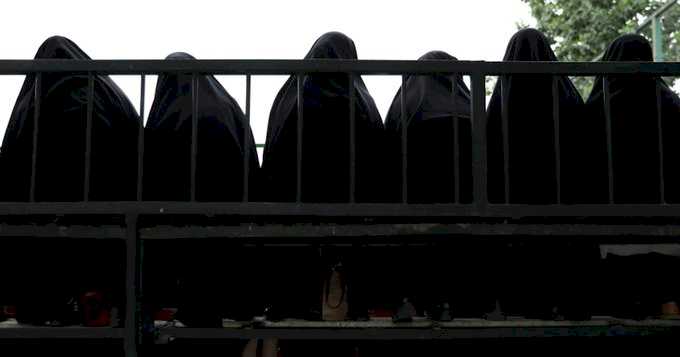
Have Iran’s authorities given up on the mandatory hijab?
Women swaying to dance music at a DJ set, strolling without headscarves through cutting-edge art exhibitions and in coffee shops showing off trendy styles that could have come from the streets of Europe.
Until recently, such scenes would have been unthinkable in the Islamic Republic of Iran, whose strict dress code for women has required they wear the hijab in public since shortly after the 1979 revolution that ousted the pro-Western shah.
But while casually flouting the rule has become increasingly common, Iran’s leadership insists the hijab is a legal obligation and is implementing a crackdown that has seen dissident figures who oppose the mandatory headscarf detained.
The tension has come at a critical moment for the clerical establishment, still recovering from the recent 12-day war with Israel and with supreme leader Ayatollah Ali Khamenei now 86.
The 2022-2023 nationwide protests, sparked by the custody death of Mahsa Amini who was arrested over alleged improper hijab, are still a recent memory.
Analysts and activists say authorities in recent months have indeed slackened off on imposing the mandatory hijab in daily life, but are far from abandoning an ideological pillar of the Islamic republic, warning a new wave of repression to re-impose it could come at any time.
Roya Boroumand, cofounder and executive director of the US-based Abdorrahman Boroumand Center for Human Rights in Iran, said it was “heartwarming” to see images of women without the headscarf, calling it the result of social pressure from below rather than “a reform granted from above.”
“What we see today is unquestionably the result of years of persistent civil disobedience by Iranian women and girls who have fought to carve out and defend a small space of freedom in public life,” she told AFP.
Women sporting braids, curls and even bleach-blond locks have now become common sights in public, while more traditional women wear the hijab or chador.
The trend, which has grown more visible in recent months in Tehran and other major cities, now extends to all generations to varying degrees.
Some women are also sporting tighter clothing and outfits that expose their shoulders, legs and midriffs, much to the dismay of conservatives who decry such “nudity” in public.
Hard to ‘put the genie back’
Boroumand said enforcement of the mandatory hijab varied across the country and that authorities were still closing down businesses deemed to have failed to enforce the rule.
Authorities earlier this month arrested two people who organized a marathon event on Iran’s Gulf island of Kish, viral images of which showed dozens of women running bareheaded through the streets. They also shut down a cafe that served as the start and finish point.
Arash Azizi, a postdoctoral associate and lecturer at Yale University, told AFP that “the regime has given up on harshly enforcing mandatory hijab but it has not at all given up on it as a principle yet.”
“It would be a grand ideological concession that it is not prepared to make. We still see places closed down and even people fined and arrested due to lax hijab. But the regime knows that it will be very difficult to put the genie back in the bottle.”
Other recent incidents have also gone viral on social media: the grand opening of a mall in Tehran, for instance, saw young people dancing and swinging their arms to a DJ’s beats.
And a match this month in Iran’s second football division was unusual not just for the presence of women -- albeit in a segregated area of the stadium -- but for the fact that many were bareheaded, brandishing scarves of the home team.
Even the office of Khamenei, in power since 1989, came under fire last month from some ultraconservatives after it published in its newspaper a photo of Iranian woman Niloufar Ghalehvand, a pilates instructor killed during the Israeli attacks, wearing a baseball cap rather than hijab.
A design week exhibition at Tehran University saw bareheaded women mingling freely amid boldly experimental art exhibits.
But it closed down early after objections from clerics in a sign of the authorities’ readiness to hit back.
‘Very real risk’
Hardline judiciary chief Gholamhossein Mohseni Ejei recently warned of a new crackdown, saying that intelligence agencies had been instructed to identify and report “organized currents promoting immorality and non-veiling”, adding authorities would take action against those involved.
Khamenei on December 3 defended the hijab in an address, saying Iranian women who respect Islamic dress “can progress more than others in all areas and play an active role both in society and in her home.”
Nobel Peace Prize winner Narges Mohammadi, who had steadfastly refused to wear the hijab in public since her release from prison on medical grounds in December 2024, was arrested on December 12 along with dozens of other activists at a memorial ceremony for a lawyer who was found dead earlier this month.
“There is a very real risk of a renewed and harsher crackdown,” said Boroumand.
Campaigners warn that while the images of coffee shops and concerts can give the impression of freedom, repression has been cranked up in recent months in the wake of the war against Israel.
The arrest of Mohammadi was just the latest of a prominent dissident figure. There have also been more than 1,400 executions so far this year -- hundreds more than in 2024 -- and groups including the Bahai, Iran’s biggest non-Muslim religious minority, are experiencing increased persecution.
“We are seeing an escalation of repression elsewhere, not a trade-off,” said Bouroumand.
The mandatory hijab has been key to Iran’s Islamic system and a response to what the authorities have traditionally termed “Gharbzadegi”, or the “West-toxification” of Iran under the shah.
But the issue is a subject of division within the political establishment inside Iran, with less-hardline figures such as President Masoud Pezeshkian maintaining that women cannot be forced to wear the hijab.
“Khamenei insists on it but the future leadership of the regime, after he passes, will likely have to formalize what’s already de-facto and give up on mandatory hijab,” Azizi said.
By Stuart Williams
View 225 times
Why is the Trump administration putting pressure on Venezuela?
U.S. President Donald Trump‘s objectives remain unclear to many lawmakers, even after 3-1/2 months, more than 20 deadly U.S. strikes on boats off the South American nation and a massive buildup of military force in the Caribbean.
Below is a look at the mix of issues that appear to be contributing to the pressure campaign.
Drugs
The Trump administration informed Congress in October that the U.S. is in “armed conflict” with drug cartels, saying Venezuelan President Nicolas Maduro plays a major role in supplying illegal drugs that kill Americans, which Maduro denies.
The administration also has designated as foreign terrorist organizations Tren de Aragua, a Venezuelan gang with prison origins, and Cartel de los Soles, a loosely defined term that emerged in the 1990s as a reference to any Venezuelan official with alleged drug links.
The U.S. Justice Department indicted Maduro himself on narcoterrorism charges in 2020, during Trump’s first term as president.
According to U.S. data, Venezuela is a transit country for cocaine bound for Europe and the U.S. and a haven for criminal groups that traffic drugs, but it is not a source for fentanyl, the drug linked to most U.S. overdoses.
Trump Monroe Doctrine
Trump this month released his National Security Strategy, arguing that the U.S. should revive the 19th century Monroe Doctrine, which declared the Western Hemisphere to be Washington’s zone of influence.
The strategy put the hemisphere at the top of Trump’s foreign policy priorities, and alludes to U.S. influence as a way to deny Beijing access to resources such as military installations and critical minerals.
As it has faced strict U.S. sanctions, Maduro’s government has signed energy and mining deals with China, as well as with Iran and Russia.
A pressure campaign that resulted in a more U.S.-friendly government would effectively bolster American influence in the region.
The Venezuelan opposition leader, Nobel Peace Prize winner Maria Corina Machado, said on Sunday that she “absolutely” supports Trump’s strategy. Machado said Trump has finally put Venezuela where it should be, as a priority for U.S. national security.
“We have been asking this for years, so it’s finally happening,” she said on CBS’s “Face the Nation” television show.
Oil
Maduro has said Washington wants Venezuela’s oil, which it currently sells mostly to China. Venezuela has the world’s largest proven oil reserves and analysts say access to oil could be a valuable bargaining chip for Maduro in his dealings with Trump, an advocate for the fossil-fuel industry.
Some Western companies, including the U.S.-based Chevron CVX.N which has a special license, remain active in Venezuela. However, the country’s industry has fallen behind, with production low for the size of its reserves. Years of sanctions have also kept Venezuela from attracting investment and obtaining equipment and parts it needs.
Analysts said Venezuela’s oil reserves would be of interest to Trump, but the larger issue is a country in the hemisphere with oil and other resources that is closely allied to U.S. rivals like China and Russia.
“The idea that you have this country, with oil, and minerals, and rare earths in our hemisphere and its main allies being China and Russia, that’s something that doesn’t really fit into Trump’s view of the world,” said David Smilde, a Venezuela expert at Tulane University.
Cuba
Many close political allies of Trump, including his Cuban-American secretary of state, Rubio, have long advocated for tough measures against Cuba’s Communist government.
They see Maduro’s government and its oil as an essential support to Cuban President Miguel Díaz-Canel and other leaders in Havana, and hope that change in Venezuela’s government will weaken Cuba’s.
Immigration
The Trump administration has been moving to terminate the legal status of hundreds of thousands of Venezuelan immigrants in the United States, pursuing the policy of “mass deportations now” that helped propel him to victory in his successful run for reelection last year.
The Venezuelan population in the United States grew by nearly 600% from 2000 to 2021, from 95,000 to 640,000, according to a Pew Research Center analysis of U.S. Census Bureau data, as the South American country faced political and economic turmoil.
Ending instability in their homeland would lessen the incentive for Venezuelans to seek new lives in the U.S.
(Reporting by Patricia Zengerle in Washington; Editing by Don Durfee and Matthew Lewis)

View 229 times

Untold secret on Umojja.com