
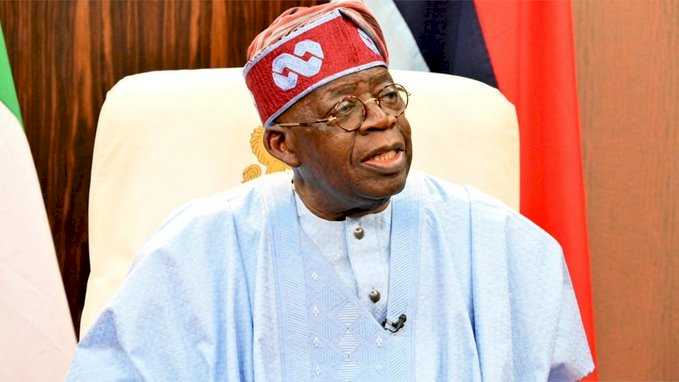


Imo State Governor Hope Uzodimma has assured Afrobeats star David Adeleke, popularly known as Davido, that their relationship remains cordial despite their opposing interests in the forthcoming Osun State governorship election.


Imo State Governor Hope Uzodimma has assured Afrobeats star David Adeleke, popularly known as Davido, that their relationship remains cordial despite their opposing interests in the forthcoming Osun State governorship election.
View 158 times
#Nigerian banks reassured customers that the financial system remains secure despite a global cyberattack campaign targeting finance, healthcare, telecommunications, government and other sectors worldwide.

View 163 times
Presidential candidate of the African Democratic Congress (ADC), Peter Obi has endorsed President Bola Tinubu’s recent caution against the construction of unnecessary flyovers, urging governments at all levels to prioritise rehabilitating existing infrastructure over embarking on costly new projects.

View 169 times
Osun State Police Command launched an investigation after gunmen attacked Independent National Electoral Commission officials and stole Permanent Voter Cards during distribution in Odo-Otin.

View 174 times
President Bola Tinubu secured North-East endorsement for his 2027 re-election bid as governors, ministers, lawmakers and traditional rulers pledged regional support.

View 182 times
The Federal Government praised Kogi State’s investments in education, describing them as evidence of how President Bola Tinubu’s Renewed Hope Agenda is translating into improved learning opportunities and youth development across the country.

View 186 times
An Islamic human rights group, the Muslim Rights Concern (MURIC), has accused Christian leaders in Nigeria of pursuing a selfish agenda for opposing the FRSC bill banning preaching inside buses.

View 186 times
Minister of Education Dr Tunji Alausa said the Federal Ministry of Education and National Bureau of Statistics are conducting a nationwide survey on out-of-school children.

View 193 times
#Nigeria: Global shipping giant CMA CGM launched the KORA EXPRESS service, linking Northern Europe with Lekki Port and West African ports to boost trade connectivity.

View 193 times
A man collected #whale poop from #beach. Those fecal samples led to a ‘groundbreaking’ study.
Samples of whale feces collected by a man from South Australia have contributed to what is described as a “groundbreaking” study of diets and microbiomes of southern right whales, according to researchers.
Rod Keogh, the operator of a whale watching business, would often see whale feces washed up on the beach during his morning runs. He collected them, knowing they were of “value” and stashed them in his freezer, a news release published last week about the research said.
The operator of the Fowlers Bay whale watching business EP Cruises had been trying to get scientists interested in his collection for years, before a PhD student named Aashi Parikh from Macquarie University in Australia connected with him.
Keogh’s “collection of poo” from Fowlers Bay in South Australia, in addition to samples from two locations in South Africa and from New Zealand’s sub-Antarctic Maungahuka (Auckland) Islands, was part of an analysis conducted by the universities of Pretoria, Otago and Auckland.
The analysis used molecular tools like DNA testing to figure out changes in the whales’ migration patterns and feeding grounds, which were linked to reduced birth rates and female fitness in some populations, the study said.
This species of whales – called tohorā in the Indigenous Māori language – had dwindled to as few as 400 individuals early last century due to whaling, after which the population bounced back to nearly 15,000.
“The scale of the animals’ recovery has varied widely across regions, and global warming poses fresh challenges because warming waters and declines in Antarctic sea ice are altering the availability of a key food, krill,” the news release said.
So, what did the study find?
Associate professor Emma Carroll of the School of Biological Sciences at the University of Auckland said in the news release that the feces showed whales were eating a much wider variety of seafood than was known. Their diet now includes young crabs, shrimp, jellyfish, mantis shrimp and lobsters.
“Tohorā appear to be flexible in what they eat, which may help them adapt as climate change alters the availability of their preferred prey in the Southern Ocean,” Carroll said in the news release. “Further research will help us understand whether these alternative food sources are able to support the health and reproductive success of tohorā in the long term.”
According to Parikh, this was the first time researchers have been able to get to “the real nitty-gritty” of exactly what the mammals have been feeding on.
“It’s exciting because it opens a lot of questions about what alternative prey sources, they might be able to survive on if climate change continues to threaten krill and even copepod populations, as it has been over the last several decades,” the PhD student said.
The news release described the whale feces as “clay-like” and “grapefruit-sized.”
“People expect something six feet long but it’s not like that,” Keogh said. “By the way, I’m looking for more researchers who want whale poo – it’s hard to find people as interested as me.”

View 195 times


Nigeria News on Umojja.com