
Supreme Leader Ayatollah Ali Khamenei, the austere cleric who ruled Iran for more than three decades and reshaped the balance of power across the Middle East through confrontation with the West and the projection of militant Shiite influence, has died. He was 86.

The undisputed leader of postrevolutionary Iran and spiritual leader of millions of Shiite Muslims, Khamenei developed the nation’s nuclear program and built a once-powerful network of regional militant groups that Israel has been systematically dismantling for more than a year. His resistance to the U.S. and Israel resonated widely in the Middle East, even as it gradually fell out of step with large parts of Iran’s population, many of whom despised living under his firebrand form of theocratic governance and wanted to escape the country’s global isolation.

After taking power in 1989, despite domestic and foreign pressure, Khamenei built Iran into a formidable military and political power. His predecessor, Ayatollah Ruhollah Khomeini, had left the nation bankrupt and humiliated, following an eight-year war with neighboring Iraq, one of the deadliest global conflicts of the past century.

“When Khomeini died, the Islamic Republic was a dumpster fire,” said Afshon Ostovar, associate professor at the Naval Postgraduate School in Monterey, Calif. “Khamenei, through guile and persistence, was able to achieve something pretty miraculous. He turned Iran into a regional power that controlled a pretty wide geography.”

An instrument for Khamenei’s expansion was a network of armed groups in the Middle East that fought at Iran’s behest, pinning down foes and providing Tehran with strategic space to prevent direct enemy attacks. At the height of Iran’s expansion, it controlled a land corridor running from Tehran through Iraq and Syria to Lebanon, through which it could transport arms and personnel.

Khamenei’s fortunes changed with what first appeared to be a victory: the attack led by Hamas, its Palestinian ally, on Israel on Oct. 7, 2023. The deadliest single assault ever on Israel, it was heralded by Tehran as a testament to the strength of the alliance it had built from scratch, and brandished Khamenei’s self-styled status as a flag bearer for the Palestinian people.


View 96 times

#Pentagon chief Hegseth says officers will stop attending Ivy League programs.

The U.S. Defense Department will stop sending officers on professional courses and graduate programs at Ivy League colleges, Pentagon chief Pete Hegseth said on Friday, declaring the schools had become “anti-American.”

The ban will come into effect from the academic year 2026-27, he said in a video posted to X.

The Trump administration is cracking down on universities over a range of issues, including diversity programs, transgender policies and pro-Palestinian protests against U.S. ally Israel’s assault on Gaza.

“For decades, the Ivy League and similar institutions have gorged themselves on a trust fund of American taxpayer dollars, only to become factories of anti-American resentment and military disdain,” Hegseth said.

“I’m ordering the complete and immediate cancellation of all Department of War attendance at institutions like Princeton, Columbia, MIT, Brown, Yale and many others starting next academic year,” he added.


View 99 times

#WASHINGTON, February 13. #US Secretary of State Marco Rubio said he planned to discuss with the Hungarian and #Slovak authorities halting their imports of Russian energy resources.

"Well, we'll have those conversations with them. We'll talk to them about what needs to happen," he told reporters before flying to Europe to attend the Munich Security Conference.

"Yeah, I'm not going to get into what we're going to say in those meetings. But more than anything else, these are countries that are very strong with us, very cooperative with the United States, work very closely with us," Rubio added.


View 128 times

#PanAfrican food and flag raising kick off Black History Month at #UPEI.

A long line of students moved through McMillan Hall at the W.A. Murphy Student Centre, filling plates with fried plantains, jerk chicken, rice and peas, and samosas prepared by local vendors, Boonoonoonoos and Out of Africa. The meal followed a Pan-African flag raising outside the Kelley Memorial Building.

Erica Kyalo, external vice-president with the UPEI Student Union, says a growing Black community on campus and beyond is helping build a stronger sense of belonging.

“We do feel that every space is a space for us to be welcome and feel included,” Kyalo said.

Prince Edward Island’s Black population more than doubled between the last two censuses, rising from about 825 people in 2016 to 1,815 in 2021, according to Statistics Canada. That number is expected to be bigger now.

It means more chances to gather and celebrate, says Reequal Smith, programs and events co-ordinator with the Black Cultural Society of Prince Edward Island, which is celebrating its 10th anniversary.

“It’s a breath of fresh air to be honest,” she said. “To see the numbers growing tremendously, you feel that, oh my goodness, I can have someone that I probably could be able to relate to, or they’ll know the stories that I’m speaking of or hey, we might even be from the same country.”

Smith added some people are still unaware of the Black community’s deep roots on the Island.

In a statement issued Monday, P.E.I. Premier Bloyce Thompson wrote that the Bog, a former west-end Charlottetown neighbourhood, was established around 1810 by freed Black slaves brought to the Island by Loyalists in the 18th century. Home to 200 residents, he wrote that most worked in domestic or labour-intensive jobs.

“Sometimes people are not knowledgeable that the Black community exists or that it has grown over the years, but it does,” Smith said.

Kyalo said awareness can lead to curiosity, and cultural understanding can spread one conversation, one event and one plate at a time.

“It’s very encouraging to see the community wanting to learn more about our culture,” she said.

“And also, getting excited to try our foods that are very, I would say, exquisite,” she added, laughing.

The reception is just the start of several Black History Month events planned on campus. A movie screening is scheduled for Feb. 9, in the Duffy Science Centre with the film still to be determined.

A cultural showcase is also set for Feb. 23, providing students the opportunity to display art such as poetry, dancing, singing or a presentation. The UPEI Student Union is also looking for vendors to sell goods during the event, with a dedicated space for baked goods, crafts, clothing and more.


View 147 times

A Sudanese doctor recounts his harrowing escape from a Darfur city under rebel bombardment.


CAIRO — Dr. Mohamed Ibrahim dashed from building to building, desperate for places to hide. He ran through streets littered with bodies. Around him, the capital of Sudan’s North Darfur province lay enveloped in smoke and fire.

Explosions, shelling and gunfire thundered from every direction.

After 18 months of battling, paramilitary fighters had overrun el-Fasher, the Sudanese army’s only remaining stronghold in the Darfur region. Ibrahim, who fled the city’s last functioning hospital with a colleague, said he feared he would not live to see the sun go down.

“All around we saw people running and falling to the ground in front of us,” the 28-year-old physician told The Associated Press, recounting the assault that began Oct. 26 and lasted three days. “We moved from house to house, from wall to wall under non-stop bombardment. Bullets were flying from all directions.”

Three months later, the brutality inflicted by the militant Rapid Support Forces is only now becoming clear. United Nations officials say thousands of civilians were killed but have no precise death toll. They say only 40% of the city’s 260,000 residents managed to flee the onslaught alive, thousands of whom were wounded. The fate of the rest remains unknown.

The violence, including mass killings, turned el-Fasher into a “massive crime scene,” U.N. officials and independent observers said. When a humanitarian team finally gained access in late December, they found the city largely deserted, with few signs of life. A Doctors Without Borders team that visited this month described it as a “ghost town” largely emptied of the people who once lived there.

Nazhat Shameem Khan, deputy prosecutor of the International Criminal Court, said war crimes and crimes against humanity were committed in el-Fasher “as a culmination of the city’s siege by the Rapid Support Forces.”

“The picture that’s emerging is appalling,” she told the U.N. Security Council last week, adding that “organized, widespread mass criminality” has been used “to assert control.”

With el-Fasher cut off, details of the attack remain scarce. Speaking with the AP from the town of Tawila, about 70 kilometers (43 miles) from the defeated capital, Ibrahim provided a rare, detailed first-person account.

As fighters swarmed in, they opened fire on civilians scrambling over walls and hiding in trenches in a vain effort to escape, while mowing down others with vehicles, Ibrahim said. Seeing so many killed felt like he was running toward his own death.

“It was a despicable feeling,” he said. “How can el-Fasher fall? Is it over? I saw people running in terror. … It was like judgment day.”

The Rapid Support Forces didn’t respond to phone calls and emails from the AP with detailed questions about the brutal attack and Ibrahim’s account. RSF commander Gen. Mohammed Hamdan Dagalo acknowledged abuses by his fighters but disputed the scale of atrocities.
Prelude to the assault

When the military toppled Sudan’s civilian-led government in a 2021 coup, it counted the Rapid Support Forces — descended from the country’s notorious Janjaweed militias — as its ally.

But the army and militants quickly became rivals. By late October, they’d fought fiercely for over two years in Darfur, already infamous for genocide and other atrocities in the early 2000s.

The army’s last stronghold was strategically-located el-Fasher. But the RSF, accused by the Biden administration of carrying out genocide in the ongoing war, had the city surrounded. As paramilitary forces tightened the noose, residents pressed into a small area on the city’s western side.

Civilians were forced to eat animal fodder as food gave out, Ibrahim said. His family fled after their home was shelled in April, wounding his mother. But with few health workers left, Ibrahim stayed, working at the Saudi Maternity Hospital as the RSF closed in.

The Saudi-financed hospital was el-Fasher’s last functioning medical center. But months of RSF shelling and drone strikes had driven away most of its staff, leaving just 11 doctors.

“We worked endless shifts and supplies dwindled to nothing,” Ibrahim said.

He was treating patients around 5 a.m. on Oct. 26 when shelling intensified. Civilians sheltering near the hospital began fleeing toward a nearby military base.

“People were running in every direction,” he said. “It was obvious that the city was falling.”
Searching for a way out

Around 7 a.m., he and another doctor decided to flee, setting out on foot for the army base about 1.5 kilometers (a mile) away. An hour later, RSF fighters attacked the hospital, killing a nurse and wounding three others. Two days later, the militants stormed the facility again, killing at least 460 people and abducting six health workers, according to the World Health Organization.

Ibrahim and his colleague darted from house to house, passing four corpses and many wounded civilians, before reaching a dormitory at the University of el-Fasher. Thirty minutes later, RSF artillery began pounding the area.

Separated from his colleague, Ibrahim sprinted across an open area where “anything could happen to you — a drone strike, a vehicle ramming over you, or RSF chasing you,” he said.

He moved between buildings to another dormitory. Hiding inside an empty water tank, he heard the screams of people chased by gunmen amid two hours of nonstop shelling.

When the bombardment slowed, he headed to the university’s medical school, jumping from roof to roof to avoid being seen. He found a broken wall behind the school’s morgue and took cover for nearly an hour. By then it was noon and RSF fighters rampaged across el-Fasher.

Ibrahim ran past 25 to 30 more dead before finally reaching the army base around 4 p.m. and reuniting with his coworker.

Thousands, mostly women, children or older people, were taking refuge there. Many sheltered in trenches; scores were injured and bleeding. Ibrahim used clothing scraps to dress wounds, stabilizing one man’s broken wrist with a sling made from a shirt.
The road out

Around 8 p.m., Ibrahim and about 200 others, mostly women and children, left the base for Tawila, a town swelled by the influx of tens of thousands fleeing the fighting. Guides led the way under a bright moon.

When they heard trucks, or spotted fighters on camels in the distance, they dropped to the ground. When threats passed they continued on.

Eventually the group reached a trench the militants built on the outskirts of el-Fasher to tighten the blockade. They helped each other scale the 3-meter-high (10-foot-high) trench. But when the group reached a second and then a third trench, some struggled and turned back. Their fate remains unknown.

At the last trench, those ahead of Ibrahim came under fire as they climbed out. Ibrahim and his colleague lay flat in the trench until the shooting subsided.

Finally, around 1 a.m., they ventured into the darkness. Five from the group lay dead, with many others wounded.
‘You’re doctors. You have money.’

The survivors walked for hours toward Tawila. Around noon on Oct. 27, they were stopped by RSF fighters on motorcycles and trucks mounted with weapons.

Encircling the group, the militants fatally shot two men and took the doctors and others captive. The fighters separated Ibrahim, his colleague and three others, chained them to motorcycles and forced them to sprint behind.

At an RSF-controlled village, fighters chained the prisoners to trees and interrogated them. At first Ibrahim and his friend told them they were ordinary civilians.

“I didn’t want to tell them I was a doctor, because they exploited doctors,” he said. ”But my friend admitted he was a doctor, so I had to.”

That evening the fighters met with a commander, Brig. Gen. Al-Fateh Abdulla Idris, who has been identified in videos executing unarmed captives.

Ibrahim and his colleague were brought out in chains then taken back to the village, where the fighters demanded ransom for their release.

“They said, ‘You are doctors. You have money. The organizations give you money, a lot of money,’” he said.

The fighters handed them a cellphone to call their families for ransom. At first, the gunmen demanded US$20,000 each. Ibrahim was so stunned by the amount that he laughed, and the fighters beat him with their rifles.

“My entire family don’t have that,” he told them.

After hours of abuse, the militants asked Ibrahim how much he could pay. When he offered $500, they “started beating me again,” he said. “They said we will be killed.”

The fighters turned to Ibrahim’s friend, repeating the demands and beatings.

Ibrahim said his colleague eventually agreed to $8,000 each — an enormous sum in a country where the average monthly salary is $30 to $50.

“I almost hit him. … I didn’t trust them to let us go,” Ibrahim said.

With little choice, Ibrahim called his family. After they transferred the money, the fighters separated the doctors, keeping them blindfolded. Eventually, they were moved to vehicles filled with fighters who told them they were being taken to Tawila.

Instead, they were dropped off in an RSF-controlled area, prompting fears they would be recaptured. When they spotted fighters, the doctors hid in the brush. They emerged an hour later, spotted tracks of horse-drawn carts and began following them.
Alive but haunted

Three hours later, they spotted the flag of the Sudan Liberation Army-Abdul Wahid, a rebel group not involved in fighting between the RSF and government troops.

The rebels allowed them entry. They were met by a Sudanese-American Physicians Association team, which provides care for those fleeing el-Fasher, then continued on.

When they finally reached Tawila, Ibrahim was reunited with survivors, including another Saudi hospital physician. The man said he had seen video of the doctors’ capture on Facebook and was sure they had been killed.

“He embraced me and we both wept,” Ibrahim said. “He didn’t imagine I was still alive. It was a miracle.”

Samy Magdy, The Associated Press

AP writers Sarah El Deeb in Beirut and Adam Geller in New York contributed to this report.


View 158 times

11 dead in minibus and truck collision in South Africa days after a similar crash killed 14 children.

Thursday’s early morning crash happened near the city of Durban in the eastern KwaZulu-Natal province. Provincial transport department official Siboniso Duma said in a statement that 11 people including a schoolchild died at the scene, although that was according to preliminary information.

“Witnesses have alleged that the truck driver made a U-turn resulting in a head-on collision,” Duma said, adding there would be an investigation into the crash by metropolitan and national police.

Garrith Jamieson, spokesperson for the private paramedic service ALS Paramedics, told The Associated Press from the scene that 11 were dead and seven people were critically injured, including the driver of the minibus, who was trapped in the wreckage. Emergency personnel were trying to free him, Jamieson said.

The fatal collision came days after a deadly head-on crash between a minibus being used to transport schoolchildren and a truck in another province.

The driver of the minibus involved in that crash near Johannesburg on Jan. 19 was arrested and charged with 14 counts of murder after authorities alleged he was driving recklessly by overtaking a line of vehicles before crashing into the truck. Authorities also said the driver’s permit to operate a minibus was expired.

The 22-year-old driver was initially charged with an offense comparable to manslaughter, but the charges were upgraded to murder, according to state prosecutors.

Minibus taxis are the preferred method of public transport for most South Africans to get to and from work, with estimates that they are used by approximately 70% of commuters. More than 10 million people in a country of 62 million use minibuses to commute, according to government statistics.

The minibuses operate on roads at busy commuter times in the morning and evening and are often involved in serious crashes.

Africa has a wider problem with road safety and crashes kill about 300,000 people annually, about a quarter of the global toll. Africa has the world’s highest road traffic fatality rate at 26.6 deaths per 100,000 people, compared with a global average of about 18, according to the U.N. Economic Commission for Africa. This is despite the continent of 1.5 billion people accounting for just about 3% of the global vehicle population.

___

Imray reported from Cape Town, South Africa.


View 162 times

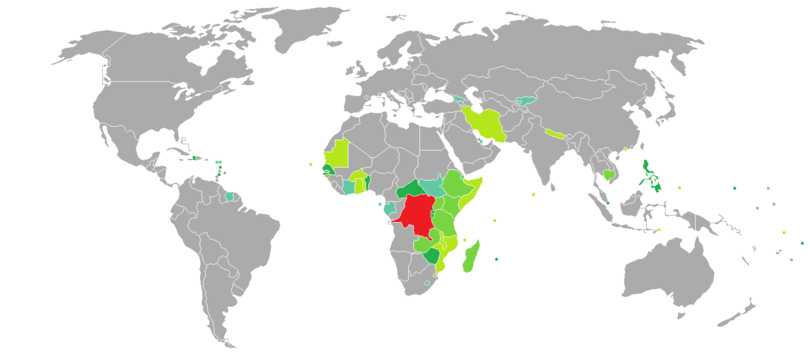
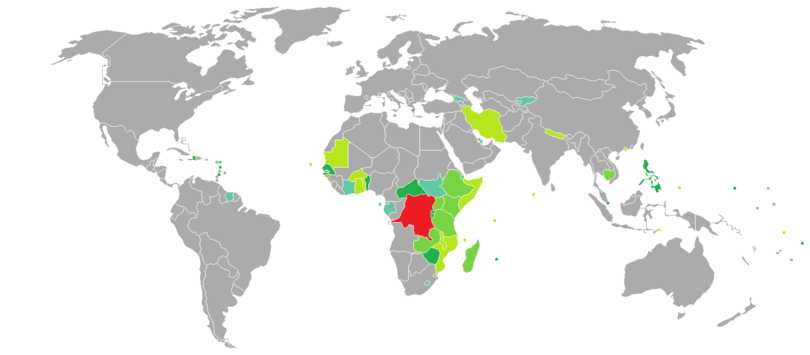
The world’s most powerful passports for 2026.

When it comes to travelling from country to country without restrictions and enjoying shorter lines at border control, there’s an elite tier of passports with more clout than others.

The top three passports, says the latest report by the Henley Passport Index, are Asian countries: Singapore at No. 1 and Japan and South Korea tied at No. 2.

Singaporeans enjoy visa-free access to 192 of the 227 countries and territories tracked by the index, which was created by the London-based global citizenship and residence advisory firm Henley & Partners, and uses exclusive data from the International Air Transport Association.

Japan and South Korea are just behind with visa-free access to 188 destinations.

Henley counts multiple countries with the same score as a single spot in its standings, so five European countries share the No. 3 slot: Denmark, Luxembourg, Spain, Sweden and Switzerland. All have visa-free access to 186 countries and territories.

It’s an all-European placement at No. 4 also, with the following countries all having a score of 185: Austria, Belgium, Finland, France, Germany, Greece, Ireland, Italy, the Netherlands and Norway.

Fifth place, with a score of 184, is held by Hungary, Portugal, Slovakia, Slovenia and the United Arab Emirates.
UAE climbs the ranks

The UAE is the country with the strongest performance in the 20-year history of the Henley Passport Index, adding 149 visa-free destinations since 2006 and climbing 57 places up the rankings. This, says the report, has been driven by the UAE’s “sustained diplomatic engagement and visa liberalization.”

At No. 6 are Croatia, the Czech Republic, Estonia, Malta, New Zealand and Poland. Australia has held onto its position at No. 7 in this quarterly update, alongside Latvia, Liechtenstein and the United Kingdom.

The U.K. is the country with the steepest year-on-year losses on the index, now having visa-free access to 182 destinations, eight fewer than it had 12 months ago.

Canada, Iceland and Lithuania are at No. 8, with visa-free access to 181 destinations, while Malaysia is at No. 9, with a score of 180.

The United States is back in the No. 10 spot, with a score of 179, after briefly dropping out for the first time in late 2025. However, this is not the recovery it might sound like. As multiple countries can occupy a single spot in the standings, there are actually 37 countries that outrank the US on the list, one more than there were in late 2025.

The U.S. is just behind the UK when it comes to year-on-year decline, having lost visa-free access to seven destinations in the past 12 months.

It’s also endured the third-largest ranking decline over the past two decades — after Venezuela and Vanuatu — falling six places from fourth to 10th.
Stability and credibility

“Passport power ultimately reflects political stability, diplomatic credibility, and the ability to shape international rules,” Misha Glenny, journalist and rector of the Institute for Human Sciences in Vienna, says in Henley & Partners’ report.

“As transatlantic relations strain and domestic politics grow more volatile, the erosion of mobility rights for countries like the U.S. and U.K. is less a technical anomaly than a signal of deeper geopolitical recalibration.”

At the opposite end of the index, at No. 101, Afghanistan remains locked in bottom place, with visa-free access to just 24 destinations. Syria is at No. 100 (with 26 destinations) and Iraq is at No. 99 (with 29 destinations).

That’s a yawning mobility gap of 168 destinations between the top- and bottom-ranked passports.

“Over the past 20 years, global mobility has expanded significantly, but the benefits have been distributed unevenly,” says Christian H. Kaelin, chairman at Henley & Partners and creator of the Henley Passport Index.

“Today, passport privilege plays a decisive role in shaping opportunity, security and economic participation, with rising average access masking a reality in which mobility advantages are increasingly concentrated among the world’s most economically powerful and politically stable nations.”

Dual citizenship

Henley & Partners is one of a number of companies that assists high-net-worth individuals in attaining dual citizenship around the globe. This month it told CNN that in 2025 it had assisted clients of 91 nationalities, but Americans were top of the list, accounting for 30 per cent of the firm’s business.

However, several European countries have recently tightened requirements for citizenship by descent and also for “golden passport” programs, which grant citizenship in exchange for financial and/or property investment. In the U.S., Ohio’s Republican senator Bernie Moreno has proposed an “Exclusive Citizenship Act” that would ban Americans from holding any other citizenship.

The Henley list is one of several indexes created by financial firms to rank global passports according to the access they provide to their citizens.

Arton Capital’s Passport Index takes into consideration the passports of 193 United Nations member countries and six territories — Taiwan, Macao, Hong Kong, Kosovo, the Palestinian territories and the Vatican. Territories annexed to other countries are excluded.

It’s also updated in real-time throughout the year and its data is gathered by close monitoring of individual governments’ portals.

Arton’s Global Passport Power Rank 2026 puts the United Arab Emirates in the top spot, with a visa-free/visa-on-arrival score of 179. Second place is held by Singapore and Spain, each with a score of 175.
The world’s most powerful passports for 2026

Singapore (192 destinations)
Japan, South Korea (188)
Denmark, Luxembourg, Spain, Sweden, Switzerland (186)
Austria, Belgium, Finland, France, Germany, Greece, Ireland, Italy, the Netherlands, Norway (185)
Hungary, Portugal, Slovakia, Slovenia, United Arab Emirates (184)
Croatia, Czech Republic, Estonia, Malta, New Zealand, Poland (183)
Australia, Latvia, Liechtenstein, United Kingdom (182)
Canada, Iceland, Lithuania (181)
Malaysia (180)
United States (179)

By Maureen O’Hare, CNN


View 200 times

#Trump says U.S. is taking control of Venezuela’s oil reserves. Here’s what it means.


President Donald Trump on Saturday said the U.S. would take control of Venezuela’s massive oil reserves and recruit American companies to invest billions of dollars to refurbish the country’s gutted oil industry.

Venezuela is sitting on a massive 303 billion barrels worth of crude — about a fifth of the world’s global reserves, according to the U.S. Energy Information Administration (EIA). That trove of crude will play a central role in the country’s future.

Oil futures don’t trade on the weekend, so the near-term impact on the price of oil is a bit of a guessing game, but Trump said the U.S. would operate the Venezuelan government for the time being.

“We’re going to have our very large United States oil companies — the biggest anywhere in the world — go in, spend billions of dollars, fix the badly broken infrastructure, the oil infrastructure,” Trump said at a news conference at Mar-a-Lago.

A U.S.-led revamp could eventually make Venezuela a much bigger supplier of oil and could create opportunities for Western oil companies and could serve as a new source of production. It could also keep broader prices in check, although lower prices might disincentivize some U.S. companies from producing oil.

Even if international access were fully restored tomorrow, it could take years and incredible expense to bring Venezuelan oil production fully back online. Venezuelan state-owned oil and natural gas company PDVSA says its pipelines haven’t been updated in 50 years, and the cost to update the infrastructure to return to peak production levels would cost $58 billion.

“For oil, this has the potential for a historic event,” said Phil Flynn, senior market analyst at the Price Futures Group. “The Maduro regime and (former Venezuelan President) Hugo Chavez basically ransacked the Venezuelan oil industry.”
Control of Venezuela’s oil trove

Venezuela is home to the largest proven oil reserve on Earth, but its potential far outweighs its actual output: Venezuela produces only about 1 million barrels of oil per day — about 0.8% of global crude production.

That’s less than half of what it produced before Maduro took control of the country in 2013 and less than a third of the 3.5 million barrels it was pumping before the Socialist regime took over.

International sanctions on the Venezuelan government and a deep economic crisis contributed to the decline of the country’s oil industry — but so did a lack of investment and maintenance, according to the EIA. Venezuela’s energy infrastructure is deteriorating, and its capacity to produce oil has been greatly diminished over the years.

Venezuela simply doesn’t produce enough oil to make that big a difference.

Oil prices have been in check this year because of oversupply fears. OPEC has ramped up production, but demand has fallen off a bit as the global economy continues to struggle with inflation and affordability after the post-pandemic price shock.

U.S. oil briefly rose above $60 a barrel when the Trump administration began seizing oil from Venezuelan vessels, but it has since fallen to $57 a barrel again. So the market’s reaction — if investors believe the strike is bad news for oil supply — will almost certainly be muted.

“Psychologically it might give it a bit of a boost, but Venezuela has oil that can be easily replaced by a combination of global producers,” Flynn said.
Venezuela’s oil potential

The kind of oil Venezuela is sitting on — heavy, sour crude — requires special equipment and a high level of technical prowess to produce. International oil companies have the capability to extract and refine it, but they’ve been restricted from doing business in the country.

The United States, the world’s largest oil producer, has light, sweet crude, which is good for making gasoline but not much else. Heavy, sour crude like the oil from Venezuela is crucial for certain products made in the refining process, including diesel, asphalt and fuels for factories and other heavy equipment. Diesel is in tight supply around the world — in large part because of sanctions on Venezuelan oil.

Unlocking Venezuelan oil could be particularly beneficial to the United States: Venezuela is nearby and its oil is relatively cheap — a result of its sticky, sludgy texture that requires significant refining. Most U.S. refineries were constructed to process Venezuela’s heavy oil, and they’re significantly more efficient when they’re using Venezuelan oil compared to American oil, according to Flynn.

“If indeed this continues to go smoothly — and it looks like a masterful operation so far — and U.S. companies are allowed to go back and rebuild the Venezuelan oil industry, it could be a game-changer for the global oil market,” Flynn said.

Trump called Venezuela’s oil business “a total bust.”

“They were pumping almost nothing by comparison to what they could have been pumping and what could have taken place,” Trump said.

“We’re going to have our very large United States oil companies — the biggest anywhere in the world — go in, spend billions of dollars, fix the badly broken infrastructure, the oil infrastructure, and start making money for the country,” he added.
What’s next for oil prices

It is unclear how energy prices will be impacted by the U.S. intervention in Venezuela.

Bob McNally, president of Washington, DC-based consulting firm Rapidan Energy Group, told CNN that he thinks the impact on prices would be “modest,” but he doesn’t expect much of an impact “unless we see signs of widespread social unrest and things look messy. More likely if this looks ‘stable.’”

“The prospect is then how quickly could a Venezuela that is pro-U.S. increase its production. That will be the parlor game. Perception may race ahead of reality. People will assume Venezuela can add oil faster than they actually can,” he said.

“Venezuela can be a huge deal but not for 5 to 10 years,” McNally said.

Oil markets open on Sunday night. Prices will depend on whether Trump “can manifest the turnaround” of Venezuela’s oil sector, according to Helima Croft, head of global commodity strategy at RBC Capital Markets.

“It all hinges on whether Venezuela defies the recent history of U.S.-led regime change efforts,” Croft told CNN. “President Trump signaled the U.S. is back in ‘nation-building mode,’ and that U.S. companies will make the requisite investments to ensure the revival of the oil sector. I think we need far more details before we declare ‘Mission Accomplished.’”

By David Goldman, CNN

CNN’s Matt Egan contributed to this report.


View 224 times

A knife attack outside Suriname’s capital Paramaribo kills at least 9 people, police say.

PARAMARIBO, Suriname — A knife attack outside Suriname’s capital of Paramaribo killed at least nine people, including children, police said Sunday.

Officials said the victims, which included five minors, were the children and neighbors of the #attacker.

In a statement issued Sunday, Suriname’s Police Corps said the suspect, a male, attempted to attack police officers who arrived on the scene and was injured during his arrest. He is now recovering in a hospital.


View 250 times

#URGENT #M23 Rebels backed by #Rwanada Still in Uvira Despite Pledge to Withdraw Local told #Reuters , M23’s “retreat” was a false promise, say locals


View 286 times